
.avif)
Why Australian Founders Should Be Looking at Europe Right Now
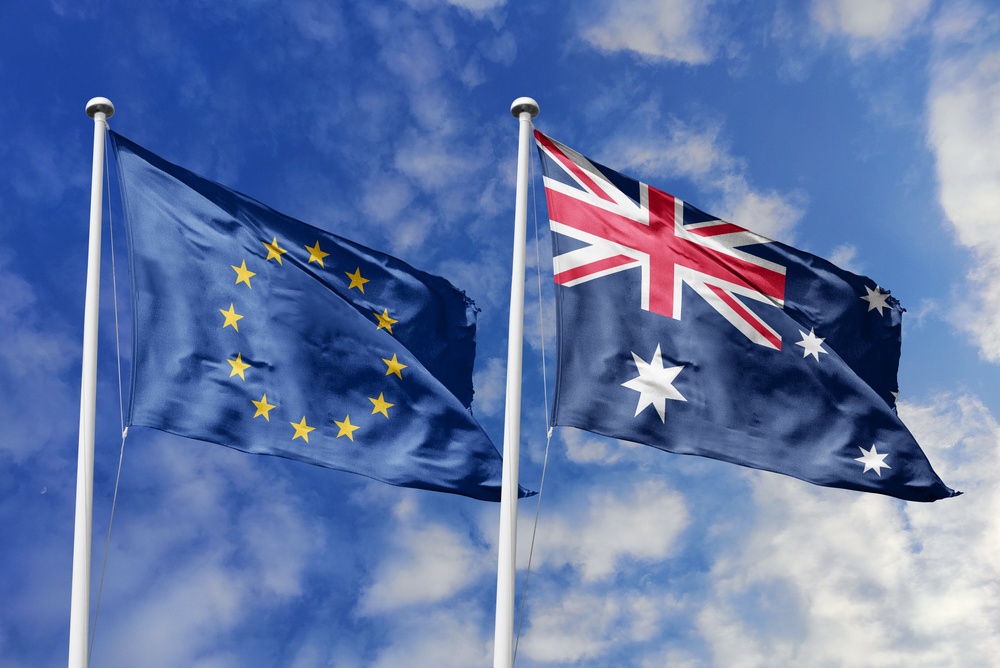
Australian founders are on a serious run, and 2026 is shaping up to be even stronger. Full-year 2025 funding surpassed $5 billion, the third-largest on record, with AI, HealthTech, and ClimateTech leading the charge. So what's the natural next step for ambitious founders looking to scale? Increasingly, the answer is Europe.
At a recent webinar hosted together with ACE, we walked a group of Australian founders through everything they need to know about scaling to the European market, from choosing the right country to cultural nuances that can make or break a deal.
Why Europe? The Numbers Make the Case
Europe is the world's largest single consumer market: 450M+ consumers, a $19T combined EU GDP, and Australian companies that expand there report up to 3x faster revenue growth than those that stay domestic.
The structural conditions for Australian companies have rarely been better. The Australia–EU Free Trade Agreement is actively reducing barriers, English is widely spoken across the continent, and European startup funding hit $78B in 2025, with the UK, Netherlands, and France alone accounting for roughly 41% of all European tech investment.
Three Markets, Three Profiles
Most Australian companies entering Europe focus on one of three markets. Each has a distinct profile.
🇬🇧 United Kingdom: The English Gateway
The natural first stop for most Australian founders. The UK shares a common law legal system with Australia, English is the native language, and London is Europe's #1 VC hub with $21B invested in 2025. Dominant sectors: FinTech, AI, SaaS. Outside London, Oxford and Cambridge lead in Life Sciences, Biotech, and Quantum Computing.
🇳🇱 Netherlands: Small Country, Big Footprint
95% of Europe's most lucrative markets sit within 1,000 km. The Netherlands ranks #1 globally for non-native English proficiency, making it the smoothest operational base for Australian companies. Tax incentives are compelling: the Innovation Box offers a 9% effective rate on R&D profits, and the 30% Ruling means foreign employees are taxed on just 70% of their salary for up to five years. Dominant sectors: AI, FinTech, Deep Tech, Energy Transition, HealthTech.
🇫🇷 France: R&D Powerhouse
Europe's second-largest economy with 68M consumers and full EU single-market access. France's Crédit d'Impôt Recherche (CIR) offers a 30% tax credit on R&D spend up to €100M, the most generous in Europe. Paris's Station F is the world's largest startup campus, and Bpifrance provides state-backed grants, loans, and co-investment for innovative companies. Dominant sectors: AI, Deep Tech, BioTech, Aerospace, Semiconductors.
The Cultural Dimension
Netherlands: Don't mistake bluntness for rudeness, the Dutch say what they mean, and they expect you to do the same. Decision-making is consensus-driven, meaning everyone needs to be on board before anything moves. Don't try to rush it.
France: Business comes second. Relationships come first, and the French love to build them over a long lunch. Expect multiple meetings before anything is decided, and make sure you have senior buy-in, because nothing closes without it.
UK: What's said and what's meant are often two different things. "This may prove slightly challenging" is not a minor concern, it's a serious reservation wrapped in politeness. If you take British understatement at face value, you'll misread the room every time.
.png)
The Support Ecosystem Is Bigger Than You Think
One of the most underappreciated aspects of expanding to Europe is the depth of government-backed support available:
- UK: Innovate UK Smart Grants, British Business Bank scale-up capital, SEIS/EIS investor schemes
- Netherlands: RVO (WBSO R&D credits, Horizon Europe support), InvestNL growth loans, EIC Accelerator (EU grant + equity up to €17.5M for deep tech)
- France: Bpifrance grants and co-investment, JEI status (payroll tax exemptions on R&D staff for up to 11 years), Horizon Europe research funding
Ready to Scale to Europe? Get in Touch!
Explore more blogs

.jpg)



.svg)
%20(1).png)