
.avif)
Why Turkish Companies Are Choosing Singapore for International Expansion
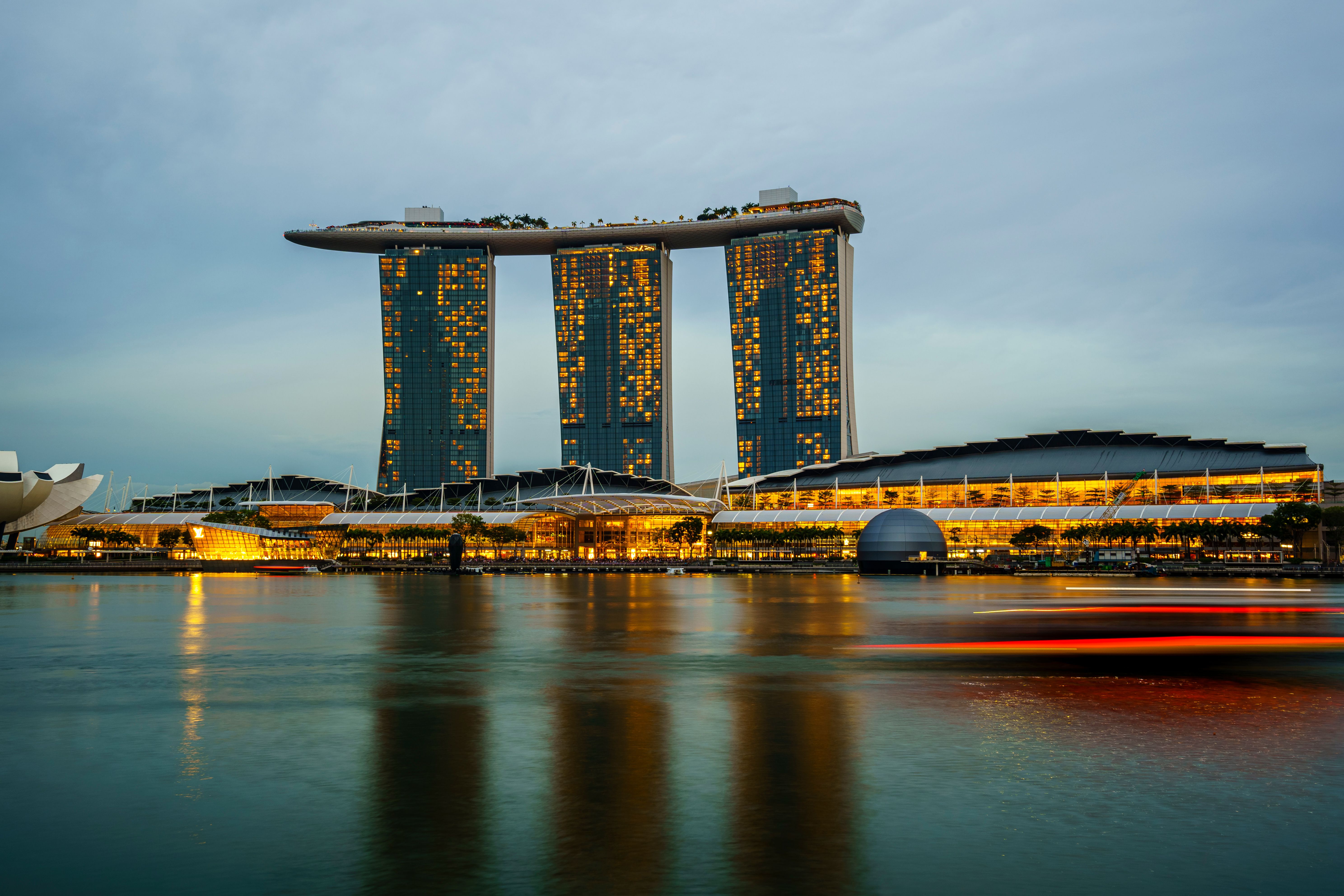
In the past years, Singapore has become a very attractive destination for Turkish businesses looking to scale beyond their home market. Following our recent webinar, hosted together with Expand with ACE, we're sharing the key insights for Turkish founders and scale-ups considering Southeast Asia as their next growth market.
Singapore as the Gateway to Asia-Pacific
For Turkish companies eyeing growth beyond Europe and the Middle East, Singapore offers a strategic foothold in one of the world's fastest-growing regions. A few reasons keep coming up in conversations with founders:
- Asia-Pacific Gateway: Singapore sits at the heart of Southeast Asia, making it the natural base for tapping into high-growth markets across the region.
- Global Trade Hub: An extensive network of Free Trade Agreements and world-class logistics infrastructure, anchored by Changi Airport and the Port of Singapore, keep goods and capital moving efficiently.
- Top-Tier Talent: A highly skilled, English-fluent, and adaptable workforce, consistently ranked among the most competitive in Asia.
- Diverse Ecosystem: A cosmopolitan business environment that blends local expertise with a strong international presence.
A Genuinely Pro-Business Environment
Singapore's reputation as a pro-business powerhouse isn't just marketing. The fundamentals are built for companies that want to scale quickly and with confidence:
- Competitive tax regime: A 17% corporate tax rate, supported by an extensive network of Double Taxation Agreements.
- No hidden burdens: Zero tax on capital gains or dividends, and straightforward profit repatriation.
- Rapid setup: Singapore consistently ranks among the fastest and most cost-effective places globally to incorporate a business.
- Regulatory efficiency: A transparent, corruption-free system designed to minimize red tape.
- Strong IP protection: Rigorous intellectual property laws within an English-based legal system.
Where the Growth Is Happening
Singapore's economy is being driven by several specialized ecosystems that are actively seeking foreign investment and partnerships:
- Advanced manufacturing & trade: electronics, semiconductors, aerospace, and logistics, the country's core export engine.
- Digital economy: significant government investment in AI, cybersecurity, and cloud computing.
- Financial services & fintech: a global hub for asset management, digital payments, and blockchain innovation.
- Biomedical & healthcare: a resilient sector focused on R&D, mRNA technology, and precision medicine.
- Urban solutions: the "green economy" driven by the Singapore Green Plan 2030, spanning solar, hydrogen, and circular economy initiatives.
- Lifestyle & services: smart buildings, construction technology, and experience-driven tourism.
The numbers back up the momentum: Singapore secured S$13.5 billion in Fixed Asset Investment commitments in 2024 and S$14.2 billion in 2025, with strategy shifting toward fewer but larger, tech-heavy projects. Roughly 15,700 jobs are expected to be created over the next five years, most in high-skilled (PMET) roles, and Singapore continues to hold roughly 60% of ASEAN's FDI share.
Choosing the Right Legal Structure
Before incorporating, foreign companies need to decide which legal structure fits their goals. The most common options include:
- Sole Proprietorship: owned by one individual with full personal liability; registered with ACRA.
- Partnership: 2–20 partners, no separate legal entity; registered with ACRA.
- Private Limited (Pte Ltd): the most common choice, offering limited liability and ideal for scaling and raising funds; registered with ACRA.
- Public Company: for businesses raising capital from the public; registered with ACRA.
- Branch Office: an extension of a foreign parent company; registered with ACRA.
- Representative Office: limited to market research, with no commercial activity allowed; registered with Enterprise Singapore.
For most Turkish companies planning to actively trade, hire, or raise capital, the Private Limited Company (Pte Ltd) is the go-to structure, offering limited liability and a setup that investors and banks recognize and trust.
How Company Registration Actually Works
One detail that often surprises first-time founders: foreign individuals cannot self-register a company in Singapore. Here's the typical process:
- Appoint a Corporate Service Provider (CSP): a licensed accounting or law firm that acts as your filing agent and typically also provides the mandatory nominee director and company secretary services.
- Reserve your company name via ACRA's BizFile+ portal (cost: S$15).
- Prepare incorporation documents: company constitution, director and shareholder details, and signed consents.
- Official registration by your CSP (standard fee: S$300).
Once approved, you'll receive your BizFile (the official proof of registration) along with a Unique Entity Number used for all government and tax interactions going forward.

Cultural Fit: What Turkish Founders Should Know
Doing business in Singapore requires some adjustment for Turkish teams. Communication is indirect and non-confrontational. A "yes" often just means "I hear you," not agreement; so confirm everything in writing.
Decisions move through structured, data-driven consensus rather than the faster, more relational style common in Turkey, so budget extra time. Punctuality is strict, negotiations are measured rather than high-energy, and feedback is delivered privately and diplomatically to preserve "face." Patience and a strong, well-prepared case go a long way.
Support Available for Foreign Companies
Singapore's government has built an extensive support network specifically to help foreign businesses establish and grow, including:
- Singapore Economic Development Board (EDB): shapes strategy to position Singapore as a global hub for business, innovation, and talent.
- Enterprise Singapore: offers grants such as the Enterprise Development Grant (EDG).
- Startup SG: the national gateway for startups, providing equity co-investment and mentorship.
- SEEDS Capital: Enterprise Singapore's investment arm, co-investing in deep-tech startups alongside private investors.
- SGInnovate: focused on funding and talent for Deep Tech startups in AI, MedTech, and Quantum Tech.
Getting Started
From choosing the right structure to navigating cultural nuances in negotiations and partnerships, having local expertise on the ground makes a measurable difference in how quickly a company gets to market.
Through our partnership with ACE, we can help companies with an on-the-ground team in Singapore that handles the entire journey. From company incorporation to accounting, payroll, tax filing, compliance, and business development, with the same support available across 19+ countries worldwide.
If your company is exploring Singapore as a base for Asia-Pacific expansion, reach out to our team to discuss what the right entry strategy looks like for your business.
Explore more blogs


.jpg)

%20(1).png)

.svg)